
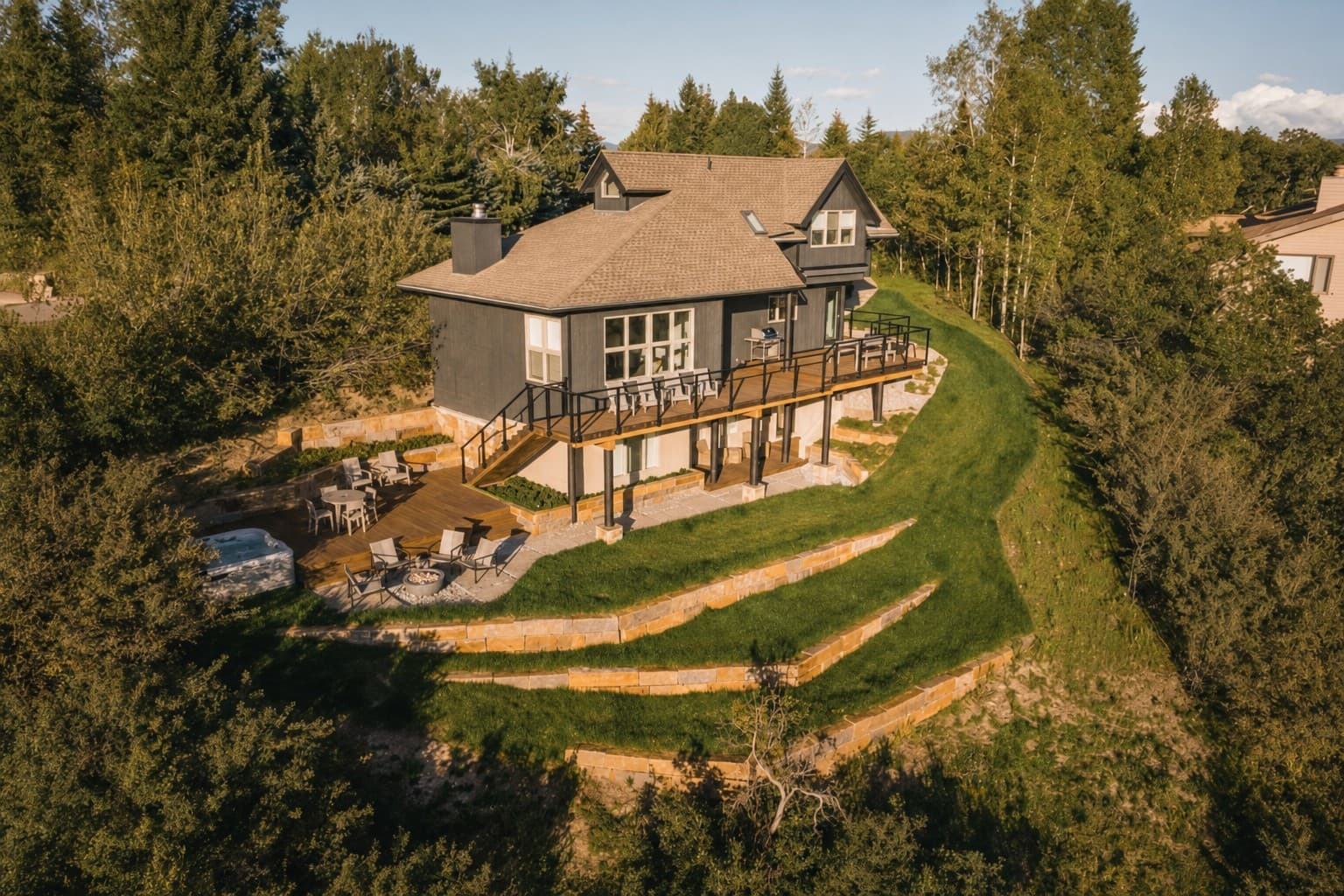
Wildfire mitigation in Aspen starts with the ground around the house. Defensible space sounds like a term from a manual, and it is, but the idea underneath it is simple: a fire moving toward a home needs fuel to get there, and the ground around the home is where that fuel either is or is not.
The Colorado State Forest Service divides that ground into three zones, measured out from the walls, in its Home Ignition Zone guide (2021). The same guide notes that embers, even small ones, are the most common way a home catches fire during a wildfire. Here is what each zone asks for.
Zone 1: the first five feet
This is the strip that touches the house, and the state calls it the zone that needs the most vigilant work. Nothing that burns belongs here. Gravel, stone, pavers, bare soil or short irrigated grass. No bark mulch against the foundation, no junipers under the windows, no firewood stacked against the siding. Embers land in this strip during a fire; the question is whether they find anything to catch.
Zone 2: five to thirty feet
Here the ground can hold plants, with spacing. The goal, in the state's words, is to give an approaching fire less fuel so it arrives with less intensity. Trees are limbed up off the ground, shrubs sit in islands with room between them rather than in a continuous hedge, grass is kept cut, and dead material comes out each season. That last step is most of the actual work.
Zone 3: thirty to one hundred feet
The forest edge. Thinning so tree crowns do not touch, and cutting the ladder fuels that let a ground fire climb into the canopy. The state frames this zone as a place to keep fire on the ground and to improve forest health at the same time. Done well, it looks like a healthier stand of trees, because it is.
What the rules say in Pitkin County
Colorado now has a statewide model code, the Colorado Wildfire Resiliency Code, and local governments must align with it. In January 2026, Pitkin County announced updates to its wildfire rules to match it, including defensible space around driveways so emergency crews can reach a home, and updated guidance for homes on steep slopes. The county expected the new rules to apply to new building permits and land use applications from late spring 2026. Anyone planning a build or a remodel should check the current requirements with the county before design is final.
What this looks like as a landscape
The worry with defensible space is a bare moonscape around a beautiful home. Good mitigation does not look like that. Stone terraces, irrigated lawn near the house, aspen groves set back and thinned, native grasses in the middle distance: the same elements a good mountain landscape already uses, arranged with fire in mind. LandWorks crews build and maintain defensible space as landscape, not as clearing.
The record
The state's guide is clear that the home ignition zone needs regular, ongoing maintenance to work. Photographs, dates and a short description of what was done, kept current each season, are worth more than any single afternoon of cutting. Premier keeps that record as part of ongoing estate care, so it exists when an insurer, a lender or the county asks for it.
Every plan starts with a walk of the property. See how wildfire mitigation at Premier works, from the assessment to the record.