
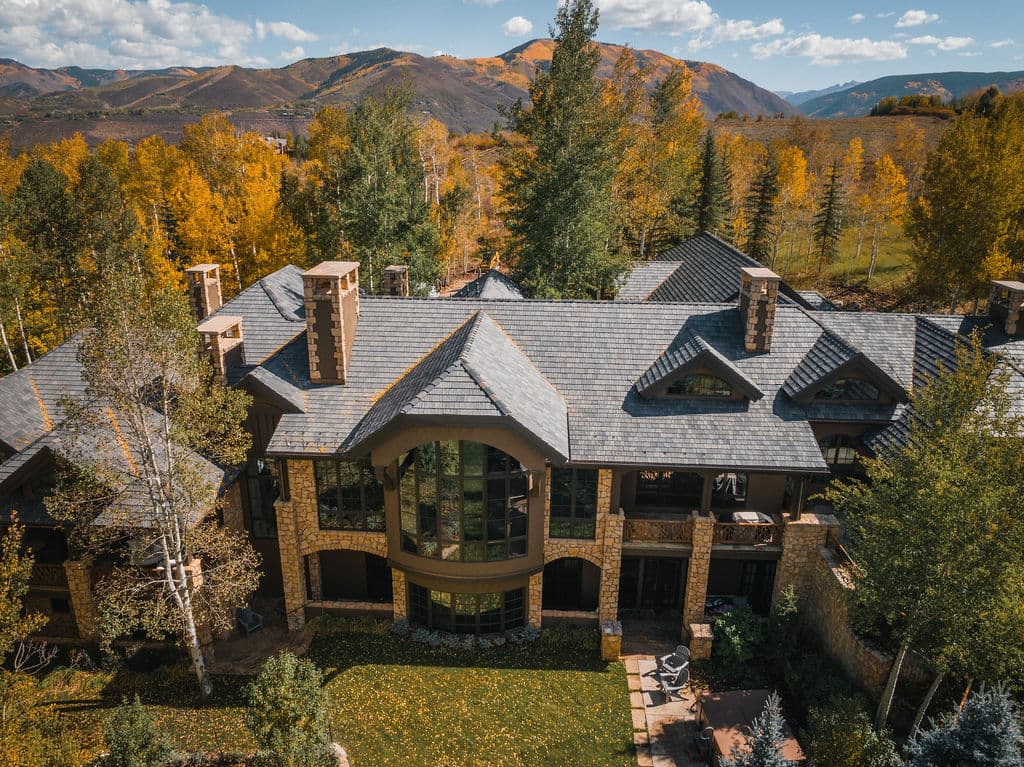
A roof replacement in Snowmass Village is planned around three things most roofs never face: a lot of snow, a short building season, and wildfire rules that keep getting stricter. Plan for all three before the old roof comes off.
Snow load comes first
Roofs in the village are built to carry far more weight than most. The Structural Engineers Association of Colorado lists a design ground snow load of 90 pounds per square foot for Snowmass Village, against 75 for Aspen (Colorado Design Snow Loads, 2016).
That number matters when you change materials. A heavier covering, a new layer of insulation, or a change in roof shape can change what the structure carries. Ask the roofer whether the new system changes the load on the framing, and whether an engineer should look at it.
The roof has to stand up to fire, too
Colorado now has a statewide wildfire code. The Aspen Times reported in September 2025 that every local government must adopt a wildfire code that meets or exceeds the state's model by April 2026, and that Snowmass Village planned to adopt it with local measures added (The Aspen Times, Sep 11, 2025).
Under the state code, roofs in low and medium to high hazard areas need a roof covering or assembly rated Class A, the highest fire rating, as Garfield County's summary of the code shows (Garfield County, Colorado Wildfire Resiliency Code roofing). Garfield County's rules are not the town's, so confirm the current requirement with the Town of Snowmass Village Building Division before you choose a material.
If the house still has an old cedar shake roof, this is usually the moment it goes. We wrote about the choices in Replacing a cedar shake roof in Aspen.
Do the edges while the roof is open
The town's own wildfire program asks owners to clear combustible material from the first five feet around the house and to cover vents with 1/8-inch metal mesh to keep embers out (Town of Snowmass Village, Wildfire Mitigation). The town notes the work can be done by the owner, a property manager, or a contractor.
A roof replacement is the easiest time to fix vents, gutters, and the edges of the roof. Ask for it in the same scope rather than as a separate job next summer.
Plan for ice, not only for snow
A new roof will still dam if the attic below it is warm. Before the work starts, ask the roofer to look at:
- Air leaks into the attic around lights, vents, and chimneys
- Insulation depth
- Ventilation from the eaves to the ridge
- Heat cable and snow retention, and whether they need to be replaced with the roof
We cover the details in Ice dams in Aspen: heat tape, snow retention, and the real fix.
Work back from the calendar
The building season above 8,000 feet is short. Materials can take weeks to arrive, and a permit has to be in hand before the old roof comes off. If you want the new roof on before the snow, the decisions about material, scope, and schedule are best made over the winter, so the work can start as soon as the roof is clear in spring.
If the house is empty during the work, decide who watches it. A roof that is half open when a storm comes through needs someone on site that day.
Questions to ask before you sign
- What material do you recommend, and what fire rating does it carry?
- Does the new roof change the load on the structure?
- What will you do about vents, gutters, flashing, and the attic while the roof is open?
- Who pulls the permit, and when?
- What happens if weather stops the work halfway?
- What records will I have when the job is done?
Premier Roofing installs, repairs, and replaces roofs built for snow load and current fire codes in Snowmass Village, Aspen, and across the Roaring Fork Valley. See what else Premier does in Snowmass Village, or ask for a roof assessment.