
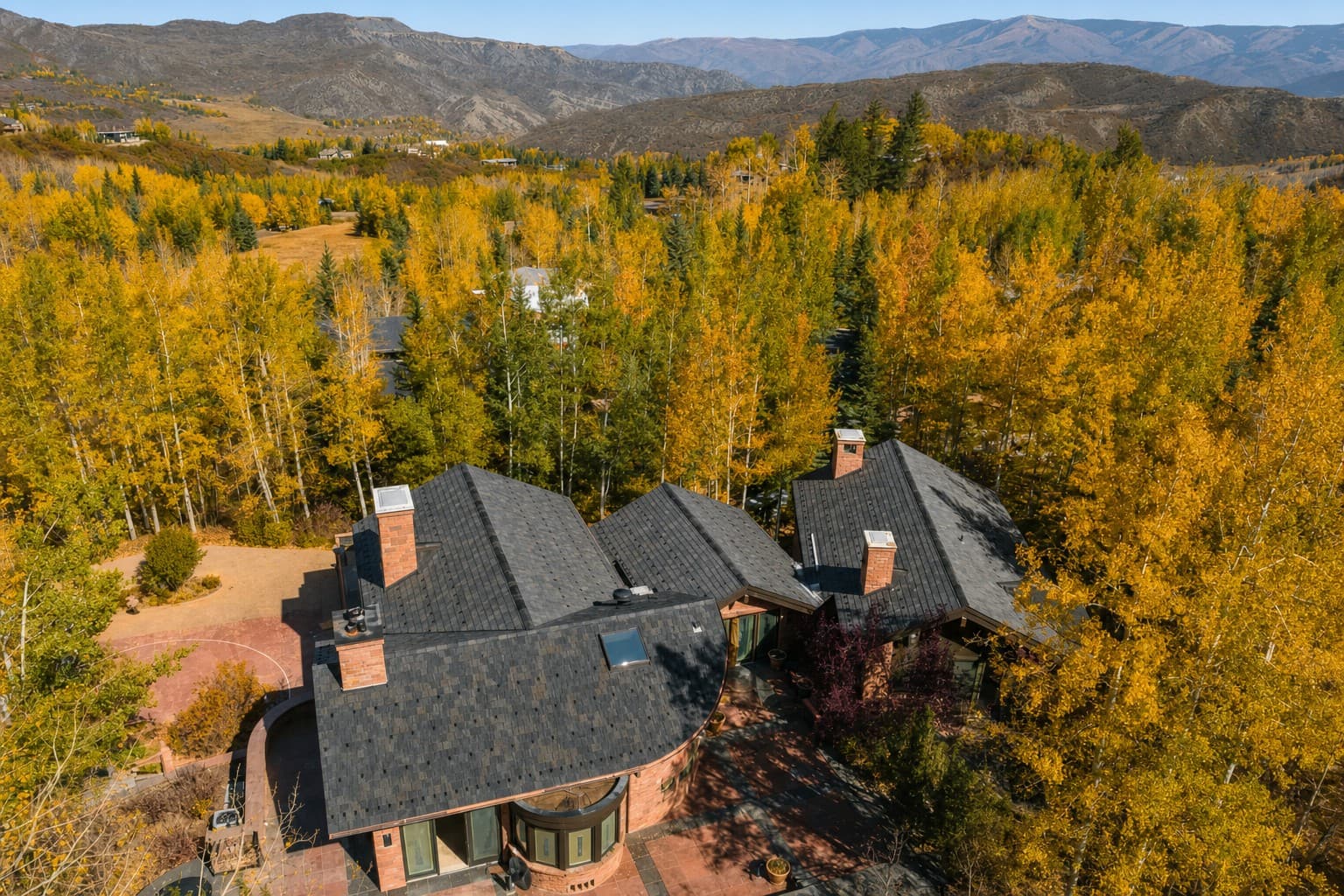
Drive any road above Basalt and look up. A large share of the roofs you see are cedar shake, put on in the eighties and nineties when it was the look of the valley. It still is a beautiful roof. It is also the one we replace most often, and the reasons have less to do with taste than with what a roof is asked to do here.
Two things changed
The first is snow load. A mountain roof carries feet of snow for months, sheds ice at the eaves, and freezes and thaws dozens of times a winter. Shake was never designed for that cycle, and as it ages it holds water where it should shed it.
The second is fire. The valley now sits inside the wildland-urban interface, and current code in Pitkin and Eagle counties treats the roof as the first line of defense. An ember lands on a roof long before a flame reaches a wall. A Class A roof assembly, ember-resistant vents, and closed eaves are now the baseline for new work, and increasingly for insurers renewing older homes.
What replaces it
There are three honest answers, and the right one depends on the house.
Synthetic shake keeps the look. Modern composite shakes carry a Class A fire rating, shed snow well, and read as cedar from the driveway. For a home where the roof is part of the architecture, this is usually the answer.
Standing-seam metal is the workhorse. It sheds snow on its own, lasts decades, and pairs well with contemporary and mountain-modern homes. It needs snow retention designed in, or the roof will deliver a winter's worth of snow onto the walkway in one afternoon.
Architectural asphalt is the practical choice for outbuildings, garages, and homes where budget leads. It meets code, installs quickly, and holds up better than its reputation at this altitude when it is vented correctly.
What the job looks like
A replacement runs in the building season, June through October, with the actual tear-off and dry-in in a window of a few days so the house is never open to weather. We inspect the deck once the old roof is off, replace what has rotted, and rebuild the flashing and vents to current code rather than reusing the old details. Heat cable and gutters are part of the same scope, because a new roof with old gutters is half a job.
When to decide
The time to plan is the winter before, when the current roof is showing what it does under load. The time to build is the summer after. If you are between those two points, an inspection is the first step, and it is a phone call.